
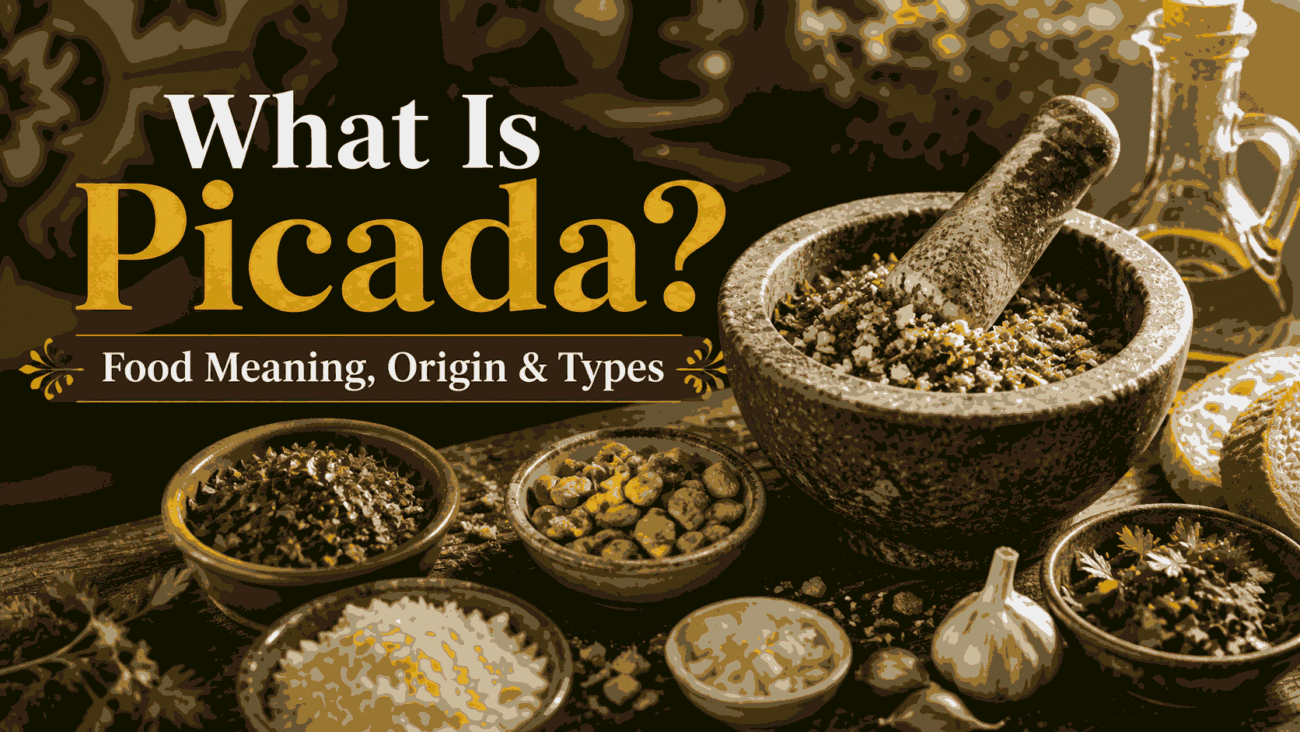
Picada is a food term with different meanings by region. In Catalan cuisine, it’s a garlic-and-nut paste used to flavor and thicken dishes. In Latin America, especially Argentina and Uruguay, picada refers to a shared appetizer platter with meats, cheeses, olives, and bread.
In this blog post, we’ll explore the versatile world of picada. We’ll dive into its origins, variations across cultures, and how it has evolved over time. So grab your fork (and maybe a glass of wine), because we’re about to embark on an appetizing journey through the meaning of picada!
Picada Meaning in Food
Picada is a term that can take many forms, but at its core, it refers to food that brings people together. In some cultures, it describes a lively platter filled with an array of meats, cheeses, and accompaniments meant for sharing. Imagine gathering around the table with friends or family while enjoying bites of deliciousness—that’s picada in action!
In other contexts, especially within Catalan cuisine, picada refers to a flavorful sauce or paste used to enhance dishes. It’s often made by grinding ingredients like nuts, herbs, and spices into a rich blend that adds depth and character to various meals. This use highlights how versatile the word truly is.
When you hear someone mention picada in Latin America—especially in places like Argentina and Colombia—it might evoke images of colorful spreads featuring cured meats alongside fresh bread and cheese. Each region puts its unique spin on this concept based on local flavors and traditions.
Whether it’s a shared plate or robust sauce, picada embodies the essence of community through food—a delightful way to experience culture one bite at a time!
Where Does Picada Come From?
Picada has deep roots, tracing back to the Mediterranean region, particularly Spain. Its origins can be linked to Catalan cuisine, where it started as a versatile cooking technique and an essential component of various dishes.
The word “picada” itself translates to “chopped,” hinting at the preparation style that involves finely chopping ingredients.
As you explore its history, you’ll find that picada is not just a recipe but an expression of local flavors and traditions.
It was traditionally used by home cooks to add depth and richness to stews and sauces. This culinary practice evolved over centuries, blending with different regional influences along the way.
In Latin America, especially in countries like Argentina and Colombia, picada took on new meanings. Immigrants brought their techniques while also adapting them based on local ingredients available in their new homes. This cultural exchange enriched picada’s identity even further.
Now, it’s embraced in various forms across continents while retaining its essence—a beautiful testament to how food evolves with time yet remains connected to its origins.
Picada in Catalan Cuisine
Picada plays a vital role in Catalan cuisine, infusing dishes with rich flavors and textures. This traditional preparation is often used to enhance stews, soups, or even fish dishes. Picture a warm bowl of fideuà—similar to paella but with noodles—where picada adds depth that transports your taste buds straight to the heart of Catalonia.
Typically made from a blend of nuts, garlic, and herbs like parsley or cilantro, picada can vary widely in ingredients based on regional preferences.
The beauty lies not just in its flavor but also in the way it embodies the essence of local cooking traditions. A well-crafted picada elevates any dish into something extraordinary.
In many homes across Catalunya, picada is passed down through generations. Each family has its unique recipe, which reflects their personal touch while maintaining an homage to tradition. It’s fascinating how this simple mix can vary so much yet always carry that unmistakable Catalan spirit.
When dining out or enjoying homemade meals in Cataluña, you’ll likely encounter various interpretations of picada that surprise and delight you each time! It’s more than just an ingredient; it’s a connection to history and culture found on every plate.
Picada as a Sauce or Thickening Paste
Picada is not just a dish; it’s also a delightful sauce or thickening paste that adds depth to many recipes. Traditionally used in Catalan cuisine, picada enhances the flavor of stews and sauces. It brings everything together with its rich, aromatic notes.
The beauty of picada lies in its versatility. Made from ground nuts, herbs, garlic, and sometimes bread, this concoction transforms basic dishes into culinary masterpieces.
Imagine stirring a spoonful of this mixture into your pot while simmering meats! The infusion of flavors creates a comforting warmth that’s hard to resist.
What makes picada unique is the balance between savory and earthy tones. Each ingredient complements the others beautifully—think toasted almonds paired with fresh parsley or fragrant saffron intertwined with garlic. This combination offers an explosion of taste that can elevate even the simplest meal.
It’s easy to prepare too! Just blend or grind your chosen ingredients until you achieve a smooth consistency.
Add it gradually to your cooking for perfect thickness and flavor enhancement without overwhelming other elements on your plate.
Common Ingredients Used in Catalan Picada
Catalan picada is a delightful blend of flavors that reflects the region’s culinary heritage. The most common ingredients used in this traditional thickening paste are almonds and hazelnuts.
which add a rich nuttiness to dishes. These nuts not only enhance texture but also bring depth to the overall taste.
Garlic plays an essential role too, infusing the picada with its robust aroma. Fresh parsley often joins the mix, providing a burst of color and freshness that balances out the richness of the nuts. It’s amazing how these simple ingredients come together to create something so flavorful.
Another key player is bread, usually toasted or fried. This adds thickness while absorbing all those wonderful flavors from other ingredients, making every bite more satisfying. Sometimes saffron makes an appearance as well, imparting a unique hue and subtle complexity.
Olive oil serves as both a binder and flavor enhancer in Catalan picada recipes. Its fruity notes elevate each ingredient’s essence while providing moisture for easy blending into sauces or stews. Each component contributes uniquely to this cherished sauce!
Picada in Latin American Cuisine
In Latin American cuisine, picada takes on a vibrant and diverse role. It’s not just about the food; it’s a cultural experience shared among family and friends. Each country has its own unique twist, reflecting local ingredients and flavors.
For instance, in Argentina and Uruguay, picada refers to an elaborate platter filled with cured meats, cheeses, olives, nuts, and bread. It’s perfect for casual gatherings or as an appetizer before a hearty meal. Guests can mix and match their favorites while enjoying good company.
Colombia offers another take on picada that often includes fried plantains or arepas alongside meats like chicharrón. Here it’s more of a substantial dish meant to satisfy your hunger rather than simply whet your appetite.
This diversity shows how adaptable picada is across different cultures. Whether served as tapas or main dishes, each version brings something special to the table—literally! The communal nature of sharing these platters fosters connection over delicious bites.
Argentinian and Uruguayan Picada Platter
When you think of Argentinian and Uruguayan cuisine, the picada platter is a must-try! This delightful assortment typically features an array of cured meats, cheeses, olives, and bread. Picture this: thin slices of salami paired with creamy blue cheese or sharp provolone. It’s a combination that sends your taste buds on a flavorful journey.
One of the best parts about picada is its social aspect. Families and friends gather around the table to share these delicious bites over good conversation and perhaps some fine wine. Each item on the platter has its own charm, from tangy marinated peppers to crunchy breadsticks that add texture.
Don’t forget about the traditional dips! Chimichurri—a zesty blend of parsley, garlic, vinegar, and oil—often makes an appearance alongside fresh salsa. They elevate every bite to another level altogether.
Whether it’s served as an appetizer or enjoyed as a casual meal during gatherings, the picada reflects local culture beautifully. It embodies community spirit while showcasing beloved flavors that keep everyone coming back for more!
Colombian Picada Food Style
Colombian picada is a delightful feast that brings people together. This vibrant dish showcases the rich culinary traditions of Colombia, and it’s often enjoyed during gatherings or celebrations. Imagine sitting around a table filled with an array of hearty ingredients, just waiting to be shared.
The charm of Colombian picada lies in its variety. It typically includes fried plantains, chicharrón (crispy pork belly), arepas, and chunks of juicy beef or chicken. Each bite offers a taste explosion that reflects the diverse regions of Colombia. It’s not just food; it’s an experience.
One key element is the dipping sauces like hogao—a fragrant blend of tomatoes and onions—that enhance every morsel you savor. The combination creates perfect harmony between flavors and textures while allowing everyone to personalize their plates.
Colombian picada isn’t merely about what’s served but how it brings friends and family closer together. Whether it’s at home, at festivals, or during casual get-togethers, this dish embodies warmth and celebration within every serving!
Picada vs Picanha: Key Difference
When diving into the world of Latin cuisine, you might stumble upon two terms: picada and picanha. While they both center around deliciousness, they refer to very different things. Understanding this distinction can enhance your culinary experiences.
Picada is primarily a mix of ingredients or a style of food often enjoyed as appetizers or tapas in various cultures. It’s all about sharing flavors and textures with friends and family, showcasing regional specialties through a delightful assortment on one plate. Think cured meats, cheeses, olives, and fresh bread; it’s an experience meant for communal enjoyment.
On the other hand, picanha refers to a specific cut of beef popular in Brazil and many South American countries. Known for its rich flavor due to its fat cap, it’s typically grilled over an open flame or cooked on skewers at barbecues called churrascos. The tenderness combined with that juicy bite makes it irresistible.
So while picada invites you to indulge in shared platters brimming with variety, picanha offers a singular focus on expertly prepared meat that stands out on any grill!
How Picada Is Served
Picada is often a communal experience, bringing people together around a shared platter. In many cultures, it’s served as an appetizer or tapas-style dish, allowing diners to sample various flavors and textures. Imagine gathering with friends or family, passing around a beautifully arranged spread filled with cured meats, cheeses, olives, and bread.
In Catalonia, picada might be presented alongside stews or seafood dishes. It acts as an embellishment that enhances the main course’s richness. Diners often add spoonfuls of this vibrant sauce to their plates for that extra burst of flavor.
In Latin America—particularly in Argentina and Colombia—you’ll find different interpretations of picada on rustic wooden boards adorned with colorful ingredients. These platters can include everything from grilled vegetables to tangy dips like chimichurri. It’s all about variety and sharing!
One key aspect of serving picada is its casual nature; there’s no need for formal dining etiquette here. Grab your fork or simply dive in with your hands! The emphasis is on enjoying good food and great company while indulging in delightful flavors together.
Why Picada Has Different Meanings
The term “picada” can be a bit confusing because it carries different meanings depending on where you are.
In Spain, particularly in Catalonia, picada refers to a specific sauce or paste used for thickening dishes and adding flavor. It’s made from ingredients like nuts, herbs, and spices blended together. This culinary tradition is deeply rooted in local culture.
Meanwhile, when you hop over to Latin America, the meaning shifts entirely. In countries like Argentina and Uruguay, picada describes a social platter filled with assorted meats, cheeses, olives, and bread—perfect for sharing among friends during gatherings or casual meals. It’s all about bringing people together around delicious food.
Colombia also has its own twist on picada; here it signifies an assortment of fried foods that might include empanadas or chicharrón.
Each region has embraced the idea of “picada” but interpreted it through their unique lens of flavors and cultural practices.
These varied interpretations highlight how food evolves based on geography and traditions while still holding onto some core elements of communal enjoyment and rich taste experiences.
Common Mistakes About Picada
When discussing picada, it’s easy to get lost in the details. One common mistake is assuming that all picadas are the same across cultures. While they share a name and some similarities, each region infuses its own traditions and ingredients into this versatile dish.
Some people might think of picada solely as a sauce or thickening paste, overlooking its broader interpretations in various cuisines. Others may confuse it with picanha, which is an entirely different cut of meat commonly found in Brazilian barbecue culture.
Another misconception involves how it’s served. Many believe that a picada must include specific ingredients or be presented in a particular way; however, creativity thrives when preparing these dishes!
It’s important to remember that whether enjoyed as part of Catalan cuisine or as an appetizer platter in Argentina, the essence of picada lies in sharing flavors and experiences. Being aware of these distinctions can enhance your appreciation for this delicious culinary tradition from around the world!
FAQs About Picada
What does picada mean in food?
Picada refers to different food concepts depending on the region. In Catalan cuisine, it is a sauce or paste made from ingredients like garlic, nuts, and bread, used to enhance flavor and thicken dishes. In Latin America, especially Argentina and Uruguay, picada refers to a snack platter with meats, cheese, olives, and other small bites.
Is picada Spanish or Latin American?
Picada originates from Spanish (Catalan) cuisine, but the term is also widely used in Latin America with a different meaning. In Spain, it is a cooking mixture, while in countries like Argentina, Uruguay, and Colombia, it refers to shared food platters.
What is Catalan picada made of?
Catalan picada is typically made using garlic, almonds or other nuts, bread, olive oil, and sometimes parsley or saffron. These ingredients are crushed together to form a paste that is added to dishes for flavor and texture.
Is picada the same as picanha?
No, picada and picanha are completely different. Picada refers to a sauce or food platter, while picanha is a specific cut of beef popular in Brazilian barbecue. They are often confused due to similar spelling but have different meanings.
What is a picada platter?
A picada platter is a popular appetizer in Argentina and Uruguay. It includes a variety of items such as sliced meats, cheeses, olives, nuts, and bread, typically served for sharing before a main meal or during social gatherings.
