
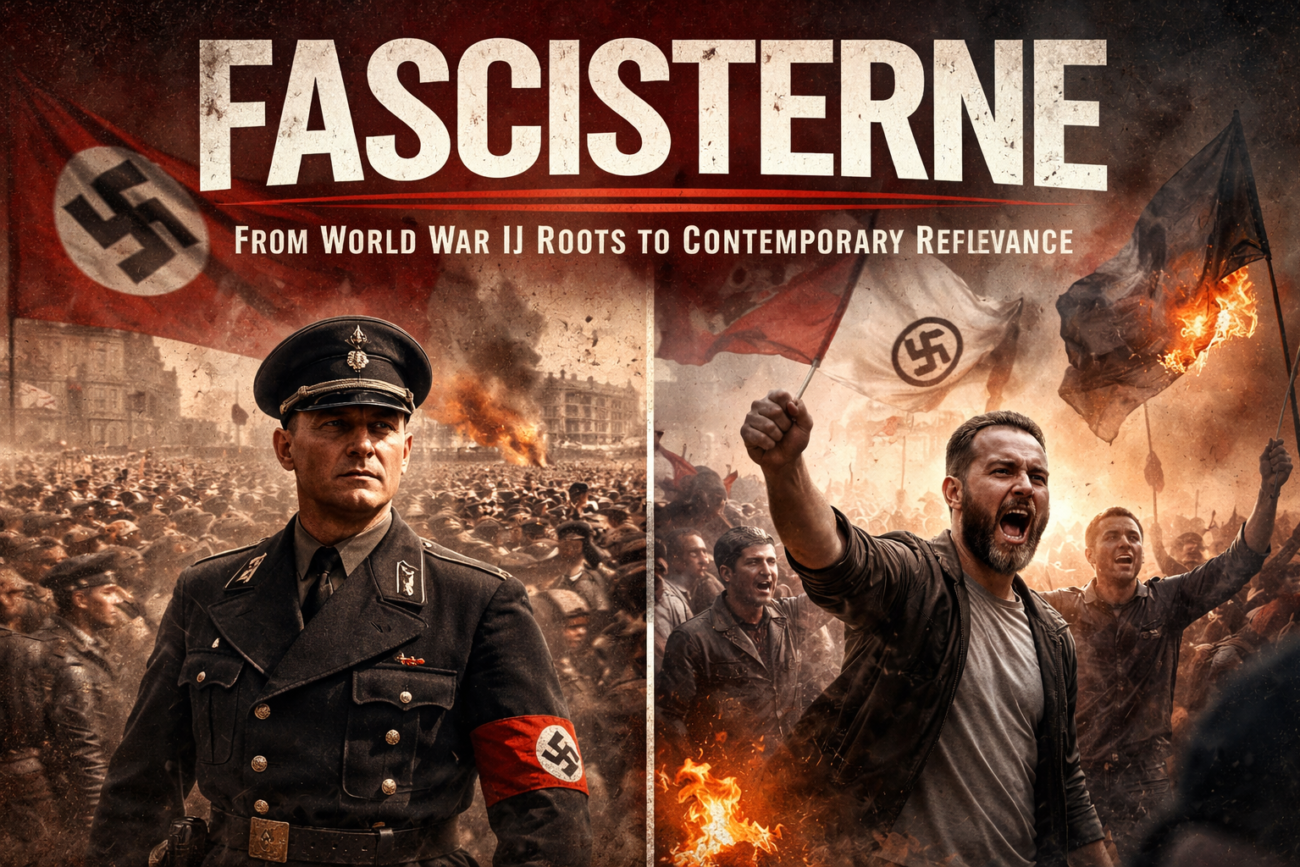
Fascisterne has long been a term that conjures up images of history, power, and political turmoil. Its roots dig deep into the tumultuous times of World War II, shaping ideologies and movements that have echoed through decades. As we navigate today’s complex political landscape, understanding fascisterne becomes crucial for grasping modern governance and societal trends.
This blog post delves into the essence of fascisterne—what it means, its historical origins, and its lasting relevance in contemporary discourse. From key figures who shaped its narrative to the controversies surrounding it today, we’ll explore how this powerful ideology continues to impact our world. Join us on this journey as we unpack fascisterne’s past while reflecting on lessons that resonate even now.
What Is Fascisterne? Definition and Meaning
Fascisterne refers to a specific political ideology rooted in authoritarianism and nationalism. While it has historical associations with totalitarian regimes, its influence stretches beyond the past into modern contexts.
At its core, fascisterne promotes strong centralized control, often led by a dictatorial leader. This governance model prioritizes state power over individual rights and freedoms. Citizens are expected to show unwavering loyalty to the state, often at the expense of dissenting voices.
The term is frequently linked with far-right movements that emphasize racial superiority and xenophobia. Such ideologies can manifest in policies aiming to suppress minority groups or promote national purity.
Fascisterne’s rhetoric often evokes themes of revivalism—seeking to restore a perceived lost greatness in national identity. This idea resonates particularly during times of economic strife or social unrest when populations crave stability and direction.
Understanding fascisterne requires recognizing its complex nature; while it may illustrate extreme authoritarian tendencies, elements can be subtly present within various political discussions today. Its relevance continues as societies grapple with issues surrounding governance, unity, and diversity amidst globalization.
Historical Origins of Fascisterne
Fascisterne traces its roots back to the early 20th century, emerging in a period marked by political turmoil and social unrest. Originating primarily in Europe, this movement sought to counteract rising socialism and communism. It was shaped by nationalist sentiments that gained traction as nations faced economic hardships after World War I.
The term “fascism” itself is derived from the Italian word “fascio,” meaning a bundle of sticks—symbolizing strength through unity. Benito Mussolini was pivotal in defining fascist ideology when he established the Fascist Party in Italy during 1919. His vision combined extreme nationalism with authoritarian governance.
As countries around Europe grappled with instability, various factions adopted similar ideologies infused with local nuances. In Germany, Adolf Hitler’s National Socialist German Workers’ Party (Nazi Party) took inspiration from these initial movements while introducing elements like racial purity into their doctrine.
This ideological spread saw fascism intertwine with existing national identities across multiple nations. The interwar years witnessed an alarming rise of fascist parties that promised order amid chaos, often exploiting fear for support.
By the time World War II began, fascisterne had evolved into a significant political force influencing global events and shaping perceptions of totalitarian regimes.
Fascisterne During World War II
Fascisterne, a term that encapsulates various far-right movements in Europe, gained significant traction during World War II. This period marked the apex of fascist ideology as it spread across nations, influencing political landscapes dramatically.
During this time, Fascisterne aligned itself with authoritarian regimes and militaristic nationalism. Countries like Italy under Mussolini and Germany under Hitler showcased how these ideologies could manifest violently. The collaboration between fascist groups was evident in their shared goals of expansionism and racial purity.
In occupied territories, local factions often adopted fascist principles to fight against perceived enemies or gain power amid chaos. Resistance fighters frequently faced brutal repression from these groups, making life perilous for opponents of fascism.
The war provided both a backdrop for radicalization and an environment where extremist beliefs flourished. Propaganda played a key role in spreading the tenets of Fascisterne among the masses. It painted dissenters as traitors while glorifying loyalty to the state.
As Nazi Germany crumbled towards the war’s end, many fascist factions either disbanded or went underground. Their legacies continued to influence post-war politics in subtle yet powerful ways throughout Europe.
Key Figures and Events Associated With Fascisterne
Key figures and events shaped the trajectory of fascisterne, leaving a mark on history. One prominent figure is Benito Mussolini, whose rise to power in Italy laid the groundwork for fascist ideology. His establishment of a totalitarian regime in 1922 set an example that inspired similar movements across Europe.
Adolf Hitler also played a critical role within this context. As the leader of Nazi Germany, he embraced and expanded upon fascist principles, integrating extreme nationalism with racial ideology. The alignment between Mussolini’s Italy and Hitler’s Germany created a powerful axis during World War II.
The March on Rome in 1922 was pivotal for the Italian Fascists. This event signified their ascent to political power through intimidation rather than democratic means. It demonstrated how fervent nationalism could mobilize masses toward authoritarianism.
Another significant moment was Kristallnacht in 1938 when anti-Jewish pogroms erupted throughout Nazi Germany. This night marked an escalation of violence against Jews under fascisterne’s influence and foreshadowed more horrific actions during the Holocaust.
These figures and events illustrate how fascisterne manipulated societal unrest to gain control, shaping both local histories and global dynamics profoundly.
Ideological Principles Behind Fascisterne
Fascisterne embodies a distinct ideological framework rooted in nationalism. This principle emphasizes the supremacy of the state, often placing national identity above individual rights. The idea is that a strong, unified nation can achieve greatness through collective effort.
Another core tenet is authoritarianism. Fascisterne advocates for centralized control, rejecting democratic processes and pluralism. Leaders are seen as embodiments of the nation’s will, making decisions without needing public approval or debate.
Militarism also plays a significant role in fascist ideology. A powerful military is viewed not just as protection but as an instrument for national expansion and glory. War becomes an avenue to demonstrate strength and to unify citizens against perceived threats.
Additionally, social Darwinism influences fascisterne’s worldview by promoting ideas of racial superiority and purity. This perspective fosters divisions within society based on ethnicity or race while encouraging xenophobia toward outsiders.
Economic control underpins much of this ideology too; though capitalism may exist, it must align with state goals. State intervention in economic matters aims to benefit the nation rather than individuals or corporations alone, reinforcing state authority over personal freedoms.
Fascisterne’s Influence on Modern Politics
Fascisterne has left an indelible mark on modern politics, shaping ideologies and movements across the globe. The resurgence of nationalist sentiments in various countries can often be traced back to principles rooted in fascist ideology. This is evident in the rise of far-right parties that emphasize strong leadership, national identity, and anti-immigrant rhetoric.
Many contemporary political figures adopt tactics reminiscent of historical fascism. Populism, a significant aspect of their strategy, rallies support through direct appeals to “the people,” often bypassing traditional political structures. These leaders frequently utilize social media platforms to disseminate propaganda akin to fascist messaging from the past.
Moreover, there’s a growing trend towards authoritarian governance among some nations. Erosion of democratic norms occurs as governments consolidate power while undermining checks and balances—a tactic seen during the height of fascist regimes.
The ideological underpinnings also manifest in divisive policies that target minority groups or dissenting voices. Fearmongering techniques serve as tools for gaining public support while stifling opposition.
Understanding these influences is crucial for recognizing patterns within our own political climates today—a reminder that history continues to shape present realities.
Controversies and Misconceptions About Fascisterne
Fascisterne, often misunderstood, carries a host of controversies and misconceptions. Many equate it solely with violence and hatred, overlooking its complex origins. While it is true that certain factions embraced aggressive tactics, many early proponents focused on national unity and social order.
A common misconception is that all nationalist movements can be categorized as fascist. This oversimplification ignores the nuanced differences between various ideologies. Not every authoritarian government fits into the fascisterne framework; many have distinct historical contexts and motivations.
Another point of contention lies in the portrayal of leaders associated with fascisterne. Figures like Mussolini are frequently blamed for their regimes’ atrocities without recognizing how their initial policies appealed to segments of society seeking stability during tumultuous times.
Additionally, some modern groups falsely claim allegiance to fascisterne principles while distorting its original tenets for opportunistic gain. Such misrepresentations contribute to misinformation about what constitutes genuine fascism versus mere nationalism or populism.
Discussions around fascisterne often provoke emotional responses rather than rational discourse. This hampers meaningful conversations about its historical significance and relevance today, leaving little room for objective analysis.
Global Perception and Cultural Impact of Fascisterne
Fascisterne has had a profound impact on global culture and perceptions of authoritarianism. Its historical roots have influenced various movements beyond Europe, extending into modern political discussions worldwide. The term evokes strong reactions, often seen as synonymous with oppression and intolerance.
In literature and film, fascisterne inspires narratives that explore themes of totalitarianism and resistance. These portrayals shape public understanding, making the concept more accessible yet often oversimplified. Cultural works serve both as warnings against such ideologies and reflections on their societal consequences.
Media coverage frequently highlights fascisterne in the context of contemporary extremist groups. This association can lead to misconceptions about its significance, diluting its historical weight while also raising awareness about ongoing threats to democracy.
Academic discourse examines how fascisterne has permeated popular culture through art, music, and fashion. Subcultures may adopt elements associated with it without comprehending their origins or implications fully.
The global perception is complicated by varying interpretations across countries; for some, it’s a relic of the past while others view it as an enduring concern in today’s political landscape. Understanding these nuances is crucial for addressing current issues inspired by this ideology.
Lessons From Fascisterne for Today’s Society
The study of fascisterne provides essential lessons for contemporary society. Understanding the rise and fall of such movements can help us recognize warning signs in today’s political landscape. Awareness is crucial; unchecked power, often masked as nationalism or populism, can lead to devastating consequences.
Fascisterne teaches us about the importance of safeguarding democratic institutions. When these institutions are weakened, it opens doors for extremist ideologies to take root. A vigilant citizenry must hold leaders accountable and demand transparency.
Another lesson relates to social cohesion and inclusivity. Fascist movements thrived on division and scapegoating marginalized communities. Modern societies should prioritize unity by celebrating diversity rather than allowing fear-based narratives to flourish.
Education plays a significant role in prevention as well. Teaching history accurately—including the horrors associated with fascisme—ensures that future generations understand its implications fully. An informed populace is less likely to be swayed by radical rhetoric.
Fostering open dialogue about differing viewpoints encourages critical thinking and understanding among citizens. Creating spaces where diverse opinions can coexist helps build resilience against authoritarian tendencies manifesting through modern-day fascisterne influences.
Conclusion: Understanding Fascisterne in Historical and Modern Context
Fascisterne represents a complex interplay of historical forces and ideologies. Its roots in the early 20th century provide insight into how authoritarian regimes can emerge during times of social unrest, economic crisis, or national upheaval. The rise of fascism was not an isolated phenomenon; it echoed broader trends across Europe and beyond.
The legacy of Fascisterne continues to resonate in contemporary politics. Many nations grapple with similar themes—nationalism, populism, and anti-establishment sentiments—that fueled its initial ascent. These parallels raise questions about governance and civic responsibility today.
Moreover, understanding Fascisterne requires examining its ideological underpinnings. Concepts like militarism, xenophobia, and elitism offer critical lenses through which we can analyze current political movements that might echo fascist tendencies.
Public discourse around this subject often fuels heated debates. Misconceptions abound regarding what defines fascist ideology versus other authoritarian systems. Distinguishing these nuances is essential for informed discussions on modern governance.
By exploring Fascisterne’s history alongside its present-day implications, society gains valuable perspectives on the importance of democratic values and human rights protections against rising extremisms worldwide.
FAQs About Fascisterne
Understanding fascisterne is essential for grasping both its historical significance and contemporary relevance. This term encapsulates a complex ideology that has shaped political landscapes across the globe.
What does “fascisterne” mean?
Fascisterne refers to an authoritarian political ideology characterized by dictatorial power, centralized control of private enterprise, and strong regimentation of society. It emerged in the early 20th century, rooted in nationalist sentiments.
What were the main origins of fascisterne?
The roots of fascisterne trace back to post-World War I Europe. Economic instability and social unrest paved the way for leaders like Mussolini and Hitler to rise. Their promise to restore national pride resonated with many disillusioned citizens.
How did fascisterne manifest during World War II?
During World War II, fascisterne became synonymous with aggressive nationalism and militarism. Countries under its influence engaged in expansionist policies leading to widespread conflict and atrocities committed against various groups.
Who were key figures associated with fascisterne?
Notable figures include Benito Mussolini in Italy, Adolf Hitler in Germany, Francisco Franco in Spain, among others. Each played pivotal roles in promoting their vision of a totalitarian state centered around hyper-nationalism.
What ideological principles underpin fascisterne?
Fasciste ideologies focus on collectivism over individual rights, anti-communism sentiment, glorification of violence as a means for achieving goals, and an emphasis on loyalty to the state above all else.
Is there modern-day influence from fascisterne today?
Yes; while overtly fascist regimes are rare now, elements can be observed within certain extremist movements globally. Nationalist rhetoric often resurfaces during times of economic or social upheaval.
Are there controversies surrounding this topic?
Absolutely; misconceptions abound about what constitutes true ‘fascisme.’ Many confuse it with general authoritarian practices or utilize it too broadly as a label without understanding deeper nuances involved with actual historical contexts.
How do societies perceive facsiterene today
